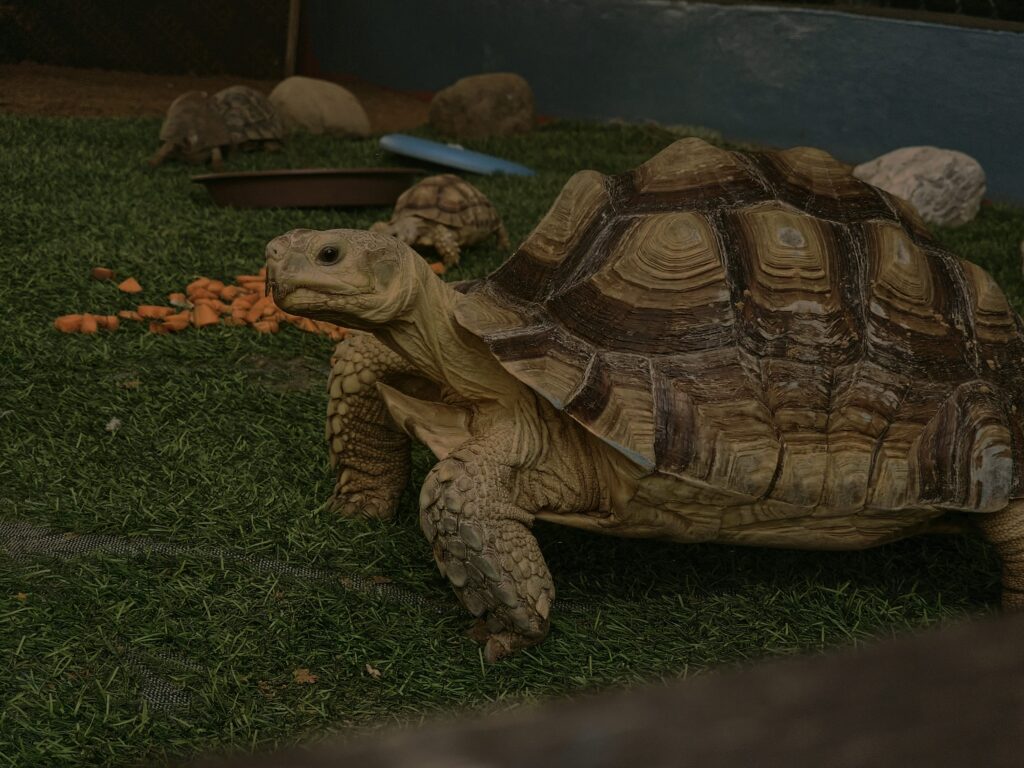
The Sulcata tortoise is admired for its distinctive appearance, gentle nature, and fascinating behavior. For many people, welcoming one into their home is the beginning of a rewarding relationship with a remarkable animal.
However, every tortoise in human care is part of a larger story. The choices people make when purchasing, adopting, or rehoming a Sulcata can influence animal welfare, rescue organizations, and the protection of wild populations.
Understanding this connection helps us move beyond simply owning a pet and toward becoming responsible stewards of the species.
1. The Pet Trade: Where Demand Begins
The exotic pet trade has made Sulcata tortoises more accessible to the public. Their small hatchling size and appealing appearance attract many first-time owners.
But the demand for these animals can create challenges when buyers are not fully informed about their future needs. A Sulcata can grow into a large tortoise requiring substantial space, a suitable diet, specialized housing, and decades of care.
Responsible consumer choices begin with learning about the animal before making a purchase. Understanding its adult size, lifespan, and habitat requirements helps people decide whether they can provide a suitable lifelong home.
2. The Growing Rescue Burden
When owners discover that they cannot meet a tortoise’s needs, some turn to rescues and sanctuaries for help. These organizations provide important services, including rehabilitation, veterinary care, housing, and rehoming support.
However, rescue facilities have limited resources. Large tortoises require substantial space, food, and ongoing maintenance, making it difficult for organizations to accommodate every animal that needs a new home.
Preventing unsuitable adoptions is one of the most effective ways to reduce this burden. Education, realistic expectations, and responsible planning can help more tortoises remain in appropriate homes throughout their lives.
3. From Individual Pets to Wildlife Conservation
Pet ownership and wildlife conservation are closely connected, but they are not the same thing. Caring for a captive Sulcata does not automatically protect wild populations.
Conservation also involves safeguarding natural habitat, supporting research, reducing illegal wildlife trade, and respecting the ecosystems where these tortoises evolved.
Sulcata tortoises are native to dry regions of Africa, including parts of the Sahel. Their natural habitats face pressures from land degradation, changing climate conditions, and human activity. Protecting these ecosystems is essential to the long-term survival of wild populations.
4. The Importance of Ethical Consumer Choices
Every prospective owner has an opportunity to make a responsible decision. Before purchasing or adopting a Sulcata, consider where the animal comes from and whether the seller or organization provides reliable information about its care.
Look for sources that prioritize animal welfare, transparent practices, and legal compliance. Avoid supporting the illegal wildlife trade or sellers who cannot explain the animal’s origin.
Adoption from a reputable rescue may be a meaningful option for people who are prepared to care for a tortoise with established needs. Whatever the source, the priority should be providing a suitable home and protecting the animal’s welfare.
5. What Responsible Ownership Looks Like
Responsible ownership extends beyond feeding and housing a tortoise. It means understanding the animal’s natural history, preparing for its adult size, and planning for its long-term care.
It also means recognizing when circumstances change. If an owner can no longer provide appropriate care, seeking help from a reputable rescue or experienced caretaker is better than allowing the animal’s needs to go unmet.
Good ownership supports both individual animal welfare and a culture of informed, sustainable pet keeping.
6. How You Can Support Conservation
You do not have to be a wildlife researcher to make a difference. Small, informed actions can contribute to better outcomes for Sulcata tortoises and their habitats.
- Learn about the species before adopting or purchasing.
- Support reputable rescue organizations and conservation programs.
- Share accurate information about long-term tortoise care.
- Choose legal and ethical sources for captive animals.
- Respect wild populations and their natural habitats.
- Encourage others to plan for the full lifetime of their pets.
When people make informed decisions, they help create a healthier relationship between the pet trade, animal welfare, and conservation.
Conclusion
The journey from pet trade to conservation responsibility begins with a simple understanding: every Sulcata tortoise deserves care that reflects its needs throughout its life.
Responsible ownership helps reduce preventable surrenders, supports rescue organizations, and encourages greater awareness of the wild ecosystems that sustain this species.
At Operation: Slow Crawl, we believe education is a powerful tool for change. By making thoughtful choices and supporting conservation, we can help ensure that Sulcata tortoises have a better future—both in human care and in the wild.