
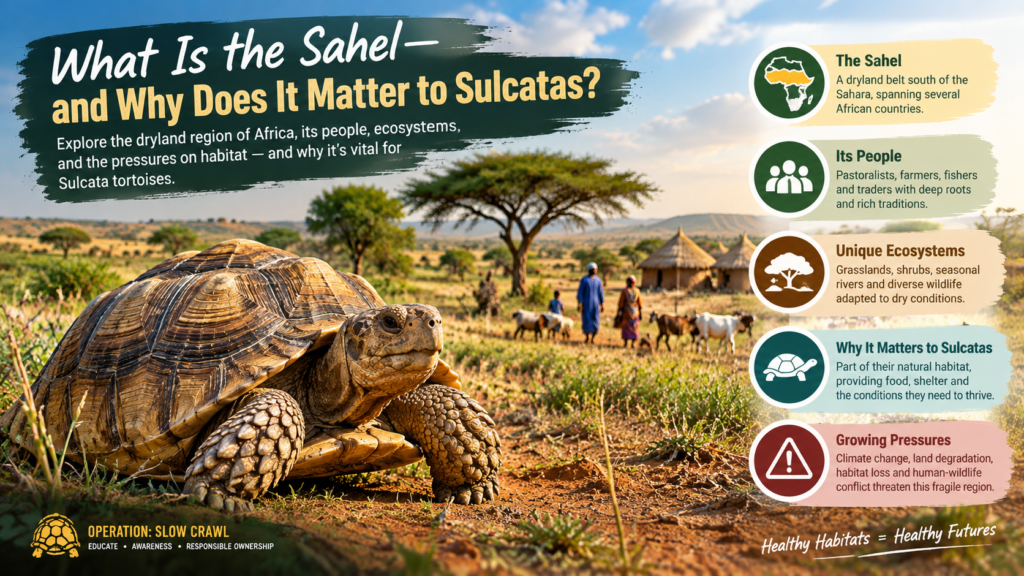
Discover the dryland region of Africa, the communities that call it home, and the environmental pressures that make protecting Sulcata tortoise habitat so important.
Introduction
The Sahel is one of Africa’s most remarkable landscapes. Stretching across the continent just south of the Sahara Desert, this broad belt of dry grasslands, savannas, and seasonal wetlands supports a rich variety of wildlife and millions of people.
It is also part of the natural range of the African spurred tortoise, commonly known as the Sulcata tortoise. To understand this animal, we must look beyond its shell and explore the environment where it evolved.
The Sahel’s climate, vegetation, wildlife, and human communities are all connected. When these systems change, the consequences can reach the animals that depend on them.
1. Where Is the Sahel?
The Sahel is a transitional zone between the Sahara Desert to the north and the wetter savannas of West and Central Africa to the south. It extends from the Atlantic coast of Senegal and Mauritania across countries such as Mali, Burkina Faso, Niger, Chad, and into Sudan.
The region is characterized by a hot climate, seasonal rainfall, and landscapes that change dramatically throughout the year. During the rainy season, grasses and other plants emerge across the dryland, while the long dry season brings limited water and reduced vegetation.
The Sahel is not a single uniform ecosystem. Its landscapes include open grasslands, thorny shrubs, scattered trees, seasonal rivers, and areas of cultivated land.
2. The People of the Sahel
The Sahel is home to diverse communities with long histories of adapting to dryland conditions. Pastoralists, farmers, fishers, and traders all contribute to the region’s cultural and economic life.
Many communities depend on livestock, crops, and natural resources for their livelihoods. Seasonal movement, traditional land management, and knowledge of local weather patterns have helped people navigate the challenges of an unpredictable environment.
Understanding these communities is essential to conservation. Protecting wildlife habitat must also recognize the needs, knowledge, and livelihoods of the people who live alongside wild animals.
3. A Dryland Ecosystem Full of Life
Although the Sahel can appear harsh, it supports a surprising diversity of life. Grasses, shrubs, and drought-adapted trees provide food and shelter for numerous species.
The region’s wildlife includes birds, antelope, reptiles, insects, and other animals that have evolved to survive with limited water and seasonal resources. Each species plays a role in the ecosystem, from grazing vegetation to dispersing seeds and contributing to nutrient cycling.
The Sulcata tortoise is one of the animals adapted to this type of environment. Its natural history is closely linked to open, warm habitats where suitable vegetation and shelter are available.
4. Why the Sahel Matters to Sulcata Tortoises
Sulcata tortoises are native to the southern edge of the Sahara and surrounding dry regions of Africa. Their natural habitat includes parts of the Sahel and neighboring areas of the continent.
These tortoises have evolved to live in hot, dry environments with seasonal changes in food and water availability. Their diet consists primarily of grasses and other fibrous vegetation, while their strong limbs and digging abilities help them cope with challenging conditions.
The natural habitat provides more than food. It also offers places to seek shade, escape extreme temperatures, and establish a suitable home range.
Learning about the Sahel helps us appreciate that Sulcatas are not simply desert animals. They are part of a complex dryland ecosystem with its own seasonal rhythms and environmental pressures.
5. Pressures on Habitat
The Sahel faces a combination of environmental and human pressures. These can affect the availability and quality of habitat for wildlife.
Climate variability and changing rainfall
Rainfall in the Sahel is highly seasonal and can vary considerably from year to year. Changes in rainfall patterns, prolonged drought, and rising temperatures can influence vegetation growth and water availability.
Land degradation
Overgrazing, soil erosion, and the loss of vegetation can reduce the quality of dryland habitat. When land becomes degraded, native plants may struggle to recover, affecting the animals that depend on them.
Habitat conversion
Agricultural expansion, roads, settlements, and other land-use changes can fragment natural areas. This may reduce the amount of suitable habitat available to wildlife and disrupt ecological connections.
Human-wildlife pressures
As people and wildlife share increasingly limited resources, conflicts can arise. Conservation efforts are most effective when they support both biodiversity and the communities living in these landscapes.
6. Why Conservation Requires a Regional Perspective
Protecting Sulcata tortoises is not only about caring for individual animals. It also involves understanding the ecosystems that support wild populations.
Conservation may include protecting natural habitat, maintaining native vegetation, supporting sustainable land management, and learning more about wild tortoise populations. It also requires cooperation among local communities, conservation organizations, researchers, and governments.
For rescued or captive Sulcatas, responsible care remains important. Understanding their natural history can help owners provide appropriate diets, habitats, and enrichment that reflect the species’ ecological needs.
Conclusion
The Sahel is a region of extraordinary ecological and cultural importance. Its dry grasslands, seasonal rainfall, and diverse communities create an environment where wildlife has adapted to some of the most challenging conditions on Earth.
For Sulcata tortoises, the Sahel represents part of the natural world that shaped their evolution and behavior. By learning about this region, we can better understand the animals we care for and the importance of protecting their wild habitats.
At Operation: Slow Crawl, we believe that education is the first step toward responsible ownership and meaningful conservation. Every Sulcata has a story that begins in the drylands of Africa—and understanding that story helps us become better stewards of the species.