
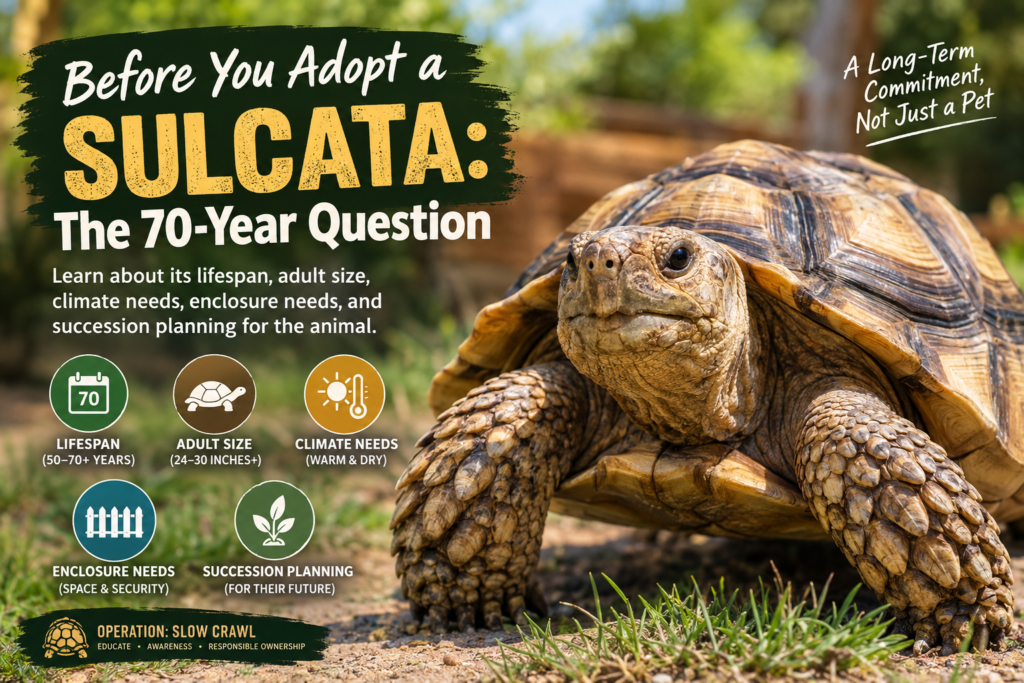
Thinking about adopting a Sulcata tortoise? Before bringing one home, learn about its long lifespan, impressive adult size, climate requirements, enclosure needs, and the responsibility of planning for its future.
Introduction
The Sulcata tortoise, also known as the African spurred tortoise, is one of the most fascinating and rewarding reptiles to care for. Known for its gentle nature, remarkable strength, and impressive size, this species has become a popular choice among tortoise enthusiasts.
However, adopting a Sulcata is a long-term commitment. These tortoises can live for many decades, and with proper care, some may reach 70 years or more. That means the decision to adopt is not simply about caring for a small tortoise today—it is about preparing for an animal that may be part of your family for generations.
Before you adopt, consider the following essential questions.
1. How Long Does a Sulcata Tortoise Live?
One of the most important things to understand about Sulcata ownership is its lifespan. A healthy Sulcata can live for 50–70 years or longer with appropriate care, nutrition, and veterinary attention.
This long lifespan means your tortoise may outlive its original owner. A young Sulcata that fits comfortably in your hands today could still require care decades from now.
When considering adoption, ask yourself:
- Can I provide consistent care for the next several decades?
- What happens if my living situation changes?
- Who will care for my tortoise if I am unable to do so?
A Sulcata is not a short-term pet. It is a lifelong responsibility that requires thoughtful planning.
2. Adult Size: The Small Tortoise That Becomes a Giant
Sulcata tortoises grow considerably larger than many first-time owners expect. Adult tortoises commonly reach 24–30 inches in shell length, with some individuals growing even larger. Large adults can weigh well over 100 pounds.
Their size affects nearly every part of their care, including housing, feeding, transportation, and veterinary visits.
A hatchling may live in a relatively small enclosure, but that arrangement will not be suitable as the tortoise matures. Responsible owners must plan for the adult animal, not just its current size.
3. Climate Needs and Temperature Requirements
Sulcata tortoises originate from the hot, dry regions of sub-Saharan Africa. They are adapted to warm conditions and need an environment that supports their natural behaviors.
A proper habitat should include:
- A warm basking area for thermoregulation.
- A temperature-controlled shelter where the tortoise can retreat.
- Appropriate nighttime temperatures.
- Protection from cold, damp weather and extreme temperature changes.
- Access to shade and fresh drinking water.
Sulcatas do not hibernate, and cold weather can be dangerous for them. In cooler climates, owners may need a heated indoor space or a suitable heated shelter during colder months.
A warm climate alone is not enough. The enclosure must provide safe temperatures, protection from weather, and room for natural movement.
4. Enclosure Needs: Plan for the Adult Tortoise
One of the most common mistakes new Sulcata owners make is underestimating the amount of space these animals need.
Sulcatas are active, strong, and excellent diggers. A suitable adult habitat should provide enough room to walk, graze, explore, and retreat into shelter. A small indoor enclosure may work temporarily for a hatchling, but an adult generally requires a secure outdoor habitat when climate conditions allow.
The enclosure should include:
- Strong, secure fencing that prevents escape.
- A safe shelter large enough for the adult tortoise.
- A suitable substrate and well-drained ground.
- Shade and protection from excessive heat.
- A secure perimeter to prevent predators from reaching young tortoises.
Sulcatas can dig under fences and damage weak barriers. Enclosure design should account for their strength and natural burrowing behavior.
5. Diet and Long-Term Health
A healthy diet is essential for Sulcata tortoises. Their natural diet consists primarily of grasses and other fibrous plant material.
A good feeding plan generally emphasizes:
- High-fiber grasses and appropriate hay.
- Safe, pesticide-free edible plants.
- Fresh water available regularly.
- Proper calcium and other supplements when recommended by a qualified reptile veterinarian.
Avoid making high-sugar fruits, processed foods, or low-fiber diets a regular part of their nutrition. Excessive or inappropriate foods can contribute to health problems.
Regular veterinary care, appropriate UVB exposure, and proper temperatures also play important roles in supporting healthy growth.
6. Succession Planning: Who Will Care for Your Tortoise?
Because Sulcatas can live for decades, succession planning is one of the most important parts of responsible ownership.
Your tortoise may still need care if you move, experience a major life change, or are no longer able to provide its daily needs. Having a plan helps protect the animal from being surrendered to an unsuitable home.
Consider creating a simple care plan that includes:
- A trusted family member, friend, or experienced tortoise caretaker.
- Written feeding, enclosure, and veterinary instructions.
- Information about your tortoise’s health history and care routine.
- A plan for housing and ongoing expenses.
- A designated person who understands and agrees to the responsibility.
The goal is to make sure your tortoise has a safe future, even when your circumstances change.
Conclusion: Think Beyond the Hatchling
A Sulcata tortoise can be an extraordinary companion, but its needs extend far beyond the early stages of life. Before adoption, consider its potential adult size, long lifespan, climate requirements, enclosure needs, and future care arrangements.
The best Sulcata owners are prepared for the tortoise they will have decades from now—not just the small tortoise they bring home today.
Ready to learn more about Sulcata tortoise care? Explore Operation: Slow Crawl for educational resources, responsible ownership guidance, and practical information to help you make an informed adoption decision.